Jackpot Lottery Winner
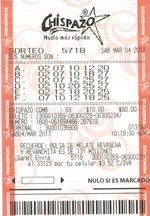
"I played the recommendation... and I won the first prize!"
See the winning lottery tickets of magayo Lotto users
As a Magayo reader you may already follow games such as SA lotto and powerball, where a small ticket can offer a chance at a life-changing jackpot. Casino games like Blackjack, Roulette, and slots also involve chance, but their odds work differently. A useful comparison must distinguish between jackpot probability, house edge, and return to player, commonly known as RTP.
"I played the recommendation... and I won the first prize!"
See the winning lottery tickets of magayo Lotto users
In SA Lotto, players choose six numbers from a field of 52. Matching all six main numbers wins the jackpot, with odds of approximately 1 in 20.4 million for each line played. Smaller prizes are easier to win because they require fewer matching numbers, but the headline jackpot remains highly unlikely.
South African PowerBall has even longer jackpot odds. Players must match five main numbers from 1 to 50 and a separate PowerBall number from 1 to 20. The chance of matching the complete combination is approximately 1 in 42.4 million per line.
These long odds are what allow lottery operators to offer exceptionally large prizes. Buying more lines increases a player’s chance in direct proportion to the number purchased, but it does not make the jackpot likely. Even 100 different lines represent only a tiny fraction of all possible combinations.
Players exploring online casino South Africa via Casino.org, will notice that casino games are generally assessed using different mathematical measures. Instead of focusing only on the chance of one top prize, players should examine the game’s house edge, RTP, and volatility.
Jackpot probability measures the likelihood of winning a specific top prize. It is especially useful for comparing Lotto and PowerBall because their main appeal is the possibility of an extraordinary payout from a relatively inexpensive ticket.
House edge describes the casino’s average mathematical advantage. If a game has a 3% house edge, the casino theoretically retains R3 for every R100 wagered over an extremely large number of bets.
RTP expresses the same long-term relationship from the player’s perspective. A game with a 97% RTP theoretically returns R97 of every R100 wagered across many plays. It does not mean an individual player will receive R97 back after spending R100. A short session can end with a profit, a complete loss, or anything in between.
Blackjack can offer one of the lowest house edges among common casino games. Under favorable rules, and when the player follows accurate basic strategy, the house edge may be around 0.5%. That corresponds to an RTP of approximately 99.5%.
However, this percentage depends on the rules and the player’s decisions. Incorrect play can increase the house advantage, while side bets often carry a much higher house edge than the main blackjack game. The favorable mathematics also does not guarantee a winning session.
European roulette has 37 pockets, numbered 0 to 36. A straight-up bet on one number therefore has a 1 in 37 chance of winning. Because the payout is 35 to 1 rather than 36 to 1, the house edge is approximately 2.7%.
American roulette includes both zero and double zero, creating 38 possible outcomes. This raises the house edge on most wagers to about 5.26%. Choosing European roulette generally provides better mathematical value, regardless of whether a player bets on individual numbers, colors, or other standard outcomes.
Slot games commonly publish an RTP percentage, often somewhere between 94% and 97%. A slot with 96% RTP has a theoretical house edge of 4%.
RTP alone does not show how frequently a slot pays. Volatility explains how returns may be distributed. Low-volatility slots tend to produce smaller, more frequent wins, while high-volatility games may produce longer losing periods with occasional larger prizes. Progressive jackpot slots can advertise enormous rewards, but their top-prize odds may be extremely long.
Blackjack played with accurate strategy often has the lowest theoretical house edge. European roulette has transparent but less favorable mathematics, while slot value varies by RTP and volatility. SA Lotto and PowerBall have much longer jackpot odds, but they offer access to exceptionally large prizes from a single ticket.
The important point is to compare the correct numbers. Jackpot probability measures the chance of one rare event, while house edge and RTP describe expected long-term performance over repeated play. None guarantees a particular result, so every stake should be treated as entertainment spending, with firm limits set in advance.
See the winning lottery tickets of magayo Lotto users
See the awards for magayo Lotto software
Download magayo Lotto software
magayo Lotto software is FREE. It is also digitally signed and 100% safe & clean.