Jackpot Lottery Winner
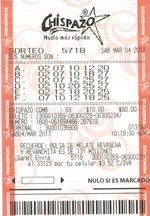
"I played the recommendation... and I won the first prize!"
See the winning lottery tickets of magayo Lotto users
Everyone has a way of picking lottery numbers. Some people go straight for birthdays. Others use the same numbers every week, while some check the latest results before making a choice. And then there are those who have a number they simply trust. But is there really such a thing as a lucky number, or does every number start each draw on equal ground?
"I played the recommendation... and I won the first prize!"
See the winning lottery tickets of magayo Lotto users
The easiest way to understand lucky numbers is to start with the draw itself.
In a physical lottery, numbered balls are selected using drawing equipment that is tested to make sure the process is fair. Digital lottery games work differently, using random number generators that are tested against statistical requirements. These systems are designed to produce outcomes without one number being favoured over another. The result should be the same either way: one draw does not influence the next.
Imagine that 6 has appeared in three consecutive draws. On the fourth draw, 6 has not become "tired" and needs a break. It still has the probability assigned to it by the rules of that particular game. The same works in reverse. If 6 hasn't appeared in 40 draws, nothing is building up behind the scenes. Its absence does not create an obligation for it to appear next. This is why independent testing matters. Lottery operators and certification bodies check whether electronic systems produce results with the required statistical properties. The World Lottery Association's security standards cover areas including randomness, testing and independent assessment.
So, if you have a spreadsheet containing the last 100 draws, ask yourself a slightly awkward question: what does draw 101 actually know about those previous results?
Mathematically, nothing.
This is probably the most common trap in lottery thinking. A number hasn't appeared for a long time, so surely its turn is coming. That's the gambler's fallacy. It is the belief that previous independent results change the probability of the next result. Consider a simple example. A particular number has not appeared in the last 50 draws. On the next draw, its chance is not boosted by those 50 misses. If the game gives that number a 1-in-50 chance on each draw, it still has a 1-in-50 chance on the next one.
The problem is that random sequences don't always look random to us. We expect things to balance out neatly. After several heads in a row, a coin toss can make tails feel more likely, even though the coin has no idea what happened five seconds earlier. Lottery results work in much the same way. A run of results can look like it has momentum when there is no mathematical connection between them.
An "overdue" number can still be your favourite pick. It just isn't overdue in the mathematical sense.
Lottery players often divide numbers into two groups: hot numbers that have appeared frequently lately, and cold numbers that haven't. There is nothing wrong with looking at the data. The problem comes when past frequency is treated as a forecast. Suppose 23 has appeared eight times in recent draws while 41 has appeared twice. That's an accurate description of what happened. It doesn't tell you that 41 is now more likely to appear next time.
Random variation can create surprisingly large differences in a relatively small sample. Over a much larger number of draws, results tend to move towards their expected long-term frequencies. That is the basic idea behind the law of large numbers. It does not mean a lottery has to "correct" itself on the next draw.
For a player, frequency analysis is therefore better viewed as a record than a prediction. It can also be useful when checking whether a lottery system is behaving within expected statistical ranges. A strange long-term deviation would be a reason to investigate the system, not evidence that a particular number has become lucky.
There is nothing particularly random about why people choose certain numbers. A birthday has a story attached to it. So does an anniversary or the number on a favourite sports shirt. Even a number that appeared on a memorable day can stick in someone's mind. That gives the number personal value, but personal value is not the same thing as probability.
There is also a small detail that many lottery players overlook. If you choose dates, you will naturally use more numbers from 1 to 31. You are also likely to make combinations similar to those chosen by other people who use birthdays. That does not make those numbers less likely to be drawn. It can matter after the draw, though. If a popular combination wins, there may be more players holding the same numbers and sharing the prize.
For someone who likes taking a personal approach to number selection, formats that let players bet on lucky numbers across different country draws offer another way to use those choices. The appeal is still the personal connection with the numbers, not a mathematical edge over other selections. Of course, lottery and number-draw play carries financial risk. Keep it within money you can afford to lose, and use responsible gambling support if it becomes difficult to keep play under control.
Wheeling is different from simply calling a number "lucky." A player starts with a larger group of numbers and uses a wheeling system to turn that pool into multiple combinations. Depending on the design, a wheel can guarantee a particular prize condition if enough of the winning numbers are included in the original pool. That's a genuine mathematical guarantee. It also has a very clear limitation: you have to include the winning numbers in your pool in the first place.
A wheel cannot identify them for you. It cannot make one of your numbers more likely to be drawn, either. What it changes is the number of combinations you cover. That can increase your coverage, but it also means buying more tickets and spending more money. So wheeling can be useful for organising combinations. It is not a way around the underlying odds.
Once you understand the probability, choosing numbers becomes a little less mysterious. You can still use your birthday. You can still keep the same five numbers for years. You can even check which numbers have appeared most often, as long as you know what that information can and cannot tell you. Some players prefer to remove all personal bias and use random selection instead. Others enjoy building their own combinations. Neither choice changes the probability of the draw. The useful distinction is between how you choose and what you expect that choice to achieve.
A few simple rules can help keep that distinction clear:
Perhaps that's the most useful thing to know before picking your next numbers. If you've been playing the same lucky numbers for ten years, would you stop using them if someone proved they had exactly the same probability as every other combination?
Maybe not. And that's perfectly reasonable.
Lottery numbers don't have to be mathematically special to be personally important. The mistake is only in expecting that personal meaning to change a random outcome.
See the winning lottery tickets of magayo Lotto users
See the awards for magayo Lotto software
Download magayo Lotto software
magayo Lotto software is FREE. It is also digitally signed and 100% safe & clean.